This content was aggregated from local dealer data and insights provided by the USA Today Network Automotive Insights team using Google Gemini and the Vehicles For Sale Near Kansas City marketplace writing team.
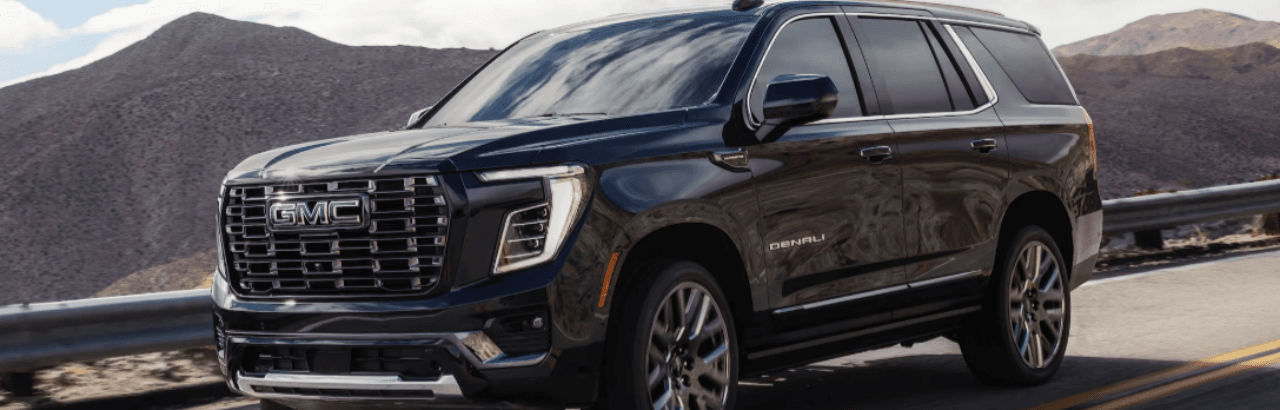
A camper can make weekend getaways and longer road trips more flexible, but towing one safely requires more than choosing a vehicle with a large body and a powerful-looking profile. If you are considering a 2027 GMC Yukon XL for camper travel around Kansas City, start by confirming the exact vehicle's towing ratings, payload capacity, equipment, and compatibility with your trailer.
The most important numbers are not interchangeable. Maximum trailer weight, payload, tongue weight, and gross combined weight rating each describe a different limit. Your actual towing setup must remain within every applicable rating—not just the advertised maximum towing capacity.
Before shopping for a new GMC Yukon XL, gather the camper's specifications and compare them with the documentation for the exact SUV configuration. The following guide explains what to check, which questions to ask, and how to prepare for a more informed towing decision.
Begin with the camper, not the SUV. Find the trailer's certification label and documentation, then identify its gross vehicle weight rating (GVWR), unloaded vehicle weight, cargo capacity, and expected loaded weight. The loaded weight matters because water, propane, food, clothing, camping equipment, and personal belongings can add substantial weight after a trailer leaves the dealership.
Next, identify the towing ratings for the exact 2027 Yukon XL configuration you are considering. Towing capacity can vary with engine, drivetrain, equipment, axle configuration, and other factors. Do not assume every Yukon XL has the same rating or that a figure published for another model year applies to the 2027 vehicle.
Pay particular attention to these limits:
Maximum trailer weight: The maximum trailer weight permitted for the specific vehicle configuration under the manufacturer's stated conditions.
Payload capacity: The weight the SUV can carry, including occupants, cargo, accessories, and trailer tongue weight.
Tongue weight: The downward force the loaded trailer places on the hitch. It counts against the tow vehicle's available payload.
Gross vehicle weight rating (GVWR): The maximum permitted loaded weight of the SUV itself.
Gross combined weight rating (GCWR): The maximum permitted combined weight of the loaded SUV and loaded trailer.
Axle ratings: The maximum loads permitted on each axle.
A trailer can be below the SUV's maximum trailer rating and still create a payload problem. For example, passengers, luggage, aftermarket accessories, and tongue weight all use some of the SUV's available carrying capacity. Check the door-jamb certification label and manufacturer documentation for the applicable limits.
The 2027 GMC Yukon XL is a full-size SUV, and buyers considering it for towing should focus on the configuration and equipment of the individual vehicle. The model name alone does not establish its towing capacity or confirm that it includes the hardware needed for a particular camper.
Verify the engine, drivetrain, axle ratio where applicable, factory towing equipment, hitch rating, wiring provisions, and any required cooling or trailering components. Ask the dealer to identify the equipment fitted to the specific vehicle and provide documentation showing its towing specifications.
Also consider how the SUV will be used when it is not towing. Passenger seating, cargo requirements, parking dimensions, and regular commuting needs all matter. A vehicle that works well for camper trips should also suit the rest of your household's driving routine.
During a test drive, assess visibility, braking feel, steering response, seating comfort, and how easily you can maneuver the vehicle. A normal test drive without a trailer cannot establish how a particular setup will behave while towing, but it can help you evaluate the SUV's everyday usability.
For towing-specific questions, request the owner's manual and trailering information for the exact model year and configuration. Confirm any restrictions on trailer type, weight distribution equipment, passenger and cargo loads, and operating conditions.
Once you have matched the camper's loaded weight to the vehicle's ratings, review the complete towing setup. Every component needs to be appropriate for the trailer and compatible with the SUV.
Use this towing equipment checklist:
Hitch receiver: Confirm the receiver's weight ratings and compatibility with the trailer.
Ball mount and hitch ball: Verify the correct size, rating, and height for the trailer coupler.
Trailer wiring: Check that the electrical connector matches the trailer and that lighting and signal functions work correctly.
Trailer brakes: Confirm whether the trailer has brakes and whether the required brake controller and related equipment are installed and configured.
Safety chains: Make sure chains are correctly rated and attached according to the vehicle and trailer instructions.
Mirrors and visibility: Confirm that you can see the trailer and surrounding traffic adequately.
Tires: Check the condition, inflation pressure, and load ratings of both SUV and trailer tires.
Weight distribution or sway control: Determine whether these systems are required or recommended for your specific combination and follow manufacturer instructions.
A professional weighing can help confirm your actual loaded weights. Weigh the SUV and trailer in the configuration you expect to use, including passengers, cargo, supplies, and fluids. Compare the results with the ratings for the SUV, trailer, hitch, tires, and axles. If any limit is exceeded, reduce the load or change the setup before traveling.
Ask the dealer which trailering features are installed and whether any additional equipment is needed. Do not assume that a vehicle advertised as tow-capable includes every component required for your camper.
Towing around Kansas City can involve city streets, suburban roads, highways, changing traffic conditions, and trips beyond the metro area. A loaded camper changes acceleration, braking distance, turning behavior, and the space needed to maneuver. Plan routes with those differences in mind.
Before your first trip, practice in a safe, open area with the trailer attached. Get familiar with turning, backing, lane positioning, and stopping. Allow additional following distance and avoid abrupt steering or braking. Check local requirements for trailer lighting, brakes, safety equipment, and towing operation before setting out.
Weather and road conditions also deserve attention. Strong crosswinds, heavy rain, and uneven road surfaces can affect trailer stability. Reduce speed when conditions require it and follow the vehicle and trailer manufacturers' guidance.
Routine inspections become especially important when towing regularly. Check tire pressures, tire condition, hitch connections, trailer lights, safety chains, and brake operation before each trip. Follow the maintenance schedules for both the SUV and camper, and ask whether frequent towing changes the recommended service requirements.
Finally, consider the impact of towing on your ownership budget. Fuel use may increase when pulling a camper, and tires, brakes, and other components may experience additional demands. Include these costs when deciding whether the Yukon XL and your intended trailer are a practical long-term match.
It may be suitable for some camper configurations, but compatibility depends on the exact SUV equipment, its ratings, and the loaded trailer weight. Verify the manufacturer's towing information for the specific vehicle before towing.
Compare the camper's actual loaded weight with the SUV's maximum trailer rating. Then check tongue weight, payload, GVWR, GCWR, axle ratings, hitch limits, and tire ratings. Every applicable limit must be respected.
Yes. Passengers, luggage, accessories, and trailer tongue weight use the SUV's available payload. A vehicle may meet its trailer-weight limit but exceed its payload or axle rating when fully loaded.
The required equipment depends on the SUV configuration, trailer, and manufacturer's specifications. Ask which trailering components are installed and whether additional equipment, such as a compatible brake controller or wiring, is needed.
Weighing the loaded combination is a useful way to verify actual weights. Include passengers, cargo, trailer supplies, and fluids, then compare the results with all applicable vehicle, trailer, hitch, axle, and tire ratings.
A successful camper trip starts with a compatible towing setup. By verifying the 2027 GMC Yukon XL's exact ratings, checking payload and tongue weight, and confirming every component, Kansas City shoppers can make a better-informed decision before selecting a vehicle and trailer combination.
Written for https://vehiclesforsalenearkansascity.com/
By the USA TODAY Network Automotive Insights Team, in collaboration with Reed Buick GMC and the Vehicles For Sale Near USA Today Kansas City Edition.
Disclaimer: This article's content is intended for informational purposes only. Vehicle specifications and features are based on data provided by J.D. Power and local dealerships and may vary by individual vehicle, VIN, trim, configuration, packages, and optional equipment. Vehicle images may not depict the exact model, trim, features, packages, accessories, or specifications described. Vehicle pricing, availability, features, and specifications are subject to change without notice. Please reference the dealership's vehicle listing and window sticker or consult the dealership directly for complete and accurate details.