This content was aggregated from local dealer data and insights provided by the USA Today Network Automotive Insights team using Google Gemini and the Vehicles For Sale Near Kansas City marketplace writing team.
For Kansas City drivers considering an electric vehicle, the 2027 Chevrolet Bolt deserves a closer look as a potential daily commuter. A compact EV can offer practical advantages for drivers who travel predictable distances, have convenient access to charging, and want to reduce gasoline expenses. But choosing an electric commuter involves more than comparing an advertised driving range or starting price. Buyers should consider real-world charging needs, winter efficiency, highway comfort, available technology, and the total cost of ownership. This 2027 Chevrolet Bolt commuter EV buying guide explains what Kansas City shoppers should verify before deciding whether the Bolt fits their routine.
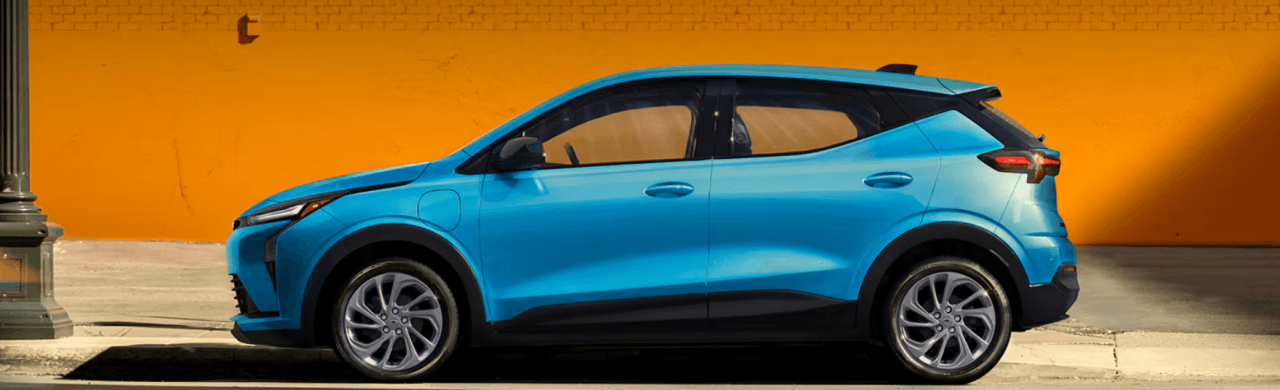
The Chevrolet Bolt name is associated with accessible electric transportation and a compact, everyday-friendly design.
For buyers evaluating the 2027 model, the central question is whether its combination of price, equipment, driving range, and charging capability provides good value.
That answer depends on the final vehicle configuration and the driver's daily needs.
A commuter who drives 20 miles per day may have different priorities from someone who regularly travels 100 miles or more.
Likewise, a household with reliable home charging may find EV ownership more convenient than a driver who depends entirely on public charging stations.
A practical commuter EV should offer enough usable driving range for routine trips while allowing the driver to recharge conveniently.
Other important qualities include:
Comfortable seating
Predictable acceleration
Easy parking and maneuverability
Reliable heating and air conditioning
Useful driver-assistance technology
Straightforward infotainment controls
Reasonable insurance costs
Manageable charging expenses
A vehicle does not need the longest available range to be a good commuter.
It needs sufficient range for the driver's actual routine, with a comfortable margin for unexpected trips, traffic, weather, and battery conditioning.
Kansas City-area commuting can involve a mixture of city streets and highways.
Drivers may travel on I-35, I-70, I-435, or other major routes.
An EV's smooth power delivery can be appealing in stop-and-go traffic.
Regenerative braking can recover some energy during deceleration.
However, real-world efficiency depends on speed, temperature, terrain, climate-control use, and driving habits.
For commuters who can charge overnight, an EV may reduce the need for regular fuel-station visits.
That convenience can be an important part of the ownership experience.
A lower purchase price does not automatically make an EV the best value.
Buyers should also consider:
Standard equipment
Optional features
Charging capability
Battery warranty
Insurance
Electricity costs
Tires
Financing
Expected depreciation
The best value comes from choosing a configuration that provides the features and capability the driver will actually use.
The 2027 Chevrolet Bolt should be evaluated as a complete transportation package.
Buyers should verify official specifications and equipment for the exact configuration they are considering.
Electric vehicles can deliver responsive acceleration because electric motors provide power differently from gasoline engines.
This can make city driving and highway merging feel smooth.
However, performance varies by vehicle.
Kansas City buyers should evaluate acceleration, steering response, and ride comfort during a test drive.
A commuter EV should feel predictable in everyday traffic rather than simply impressive during brief acceleration.
Driving range is one of the most important EV specifications.
However, an official range estimate is not a guarantee of how far the vehicle will travel in every situation.
Actual range can vary with:
Highway speed
Outside temperature
Heating and air-conditioning use
Terrain
Tire condition
Passenger and cargo weight
Driving style
Battery condition
Kansas City drivers should consider both summer and winter operation.
Cold weather can reduce available range because the battery and cabin may require additional energy for temperature management.
Start by estimating your daily driving distance.
For example, a commuter who drives 30 miles round-trip may use substantially less energy than someone who drives 90 miles daily.
However, buyers should not plan to use the entire advertised battery range every day.
A practical range plan includes a margin for unexpected errands, detours, weather, and charging limitations.
Consider the following illustrative scenarios:
Daily Driving Pattern | Round-Trip Distance | Main Buying Consideration |
Short local commute | 20 miles | Charging convenience and purchase value |
Moderate metro commute | 45 miles | Efficiency and winter range margin |
Longer suburban commute | 80 miles | Reliable charging and daily energy use |
Frequent regional travel | 120+ miles | Highway range and fast-charging access |
These distances are hypothetical examples.
Buyers should calculate their own mileage and compare it with official 2027 Bolt range information.
Home charging can make EV ownership more convenient.
Depending on the vehicle and available equipment, drivers may be able to charge using a compatible household electrical connection or a dedicated Level 2 charging setup.
However, charging speed depends on the vehicle, charger, electrical circuit, and installation.
A qualified electrician should evaluate whether a home can safely support the intended charging equipment.
Buyers should also confirm the 2027 Bolt's charging specifications and compatible connectors.
Public charging can be useful for longer trips or drivers without home charging.
However, charger availability, pricing, reliability, and charging speed vary.
A charging station's advertised power rating does not guarantee that a vehicle will charge at that rate.
Charging performance can depend on battery temperature, state of charge, vehicle limits, and station conditions.
Kansas City buyers should identify charging options near home, work, and common travel routes.
They should also verify connector compatibility and any required adapters or accounts.
Regenerative braking allows an EV to recover some energy during deceleration.
This energy is returned to the battery.
The feature can improve efficiency during certain driving conditions.
However, regenerative braking behavior varies by vehicle and may be affected by battery temperature or charge level.
Buyers should test the system and review the owner's manual.
A commuter vehicle should be easy to use.
Depending on configuration, the Bolt may offer features such as:
Digital driver information
Infotainment controls
Navigation-related functions
Smartphone connectivity
Climate-control technology
Heated seating
Driver-assistance systems
The exact 2027 equipment should be verified.
Buyers should not assume that features offered on previous Bolt models are included on the new vehicle.
Trim selection can have a major effect on value.
A lower-priced configuration may provide everything a commuter needs.
A higher-priced configuration may add comfort, appearance, or technology features.
However, buyers should compare the actual 2027 Bolt lineup rather than relying on assumptions based on previous model years.
Start by identifying which features are essential.
For many commuters, these may include:
Adequate driving range
Convenient charging
Comfortable seating
Climate-control performance
Driver-assistance technology
Reliable smartphone connectivity
Practical cargo space
Then separate desirable upgrades from necessities.
A premium audio system or upgraded interior trim may improve the ownership experience.
However, those features may not be essential for every buyer.
Category | Base Configuration | Higher-Equipment Configuration |
Purchase price | Verify official MSRP and seller quote | Verify price difference |
Driving range | Confirm EPA estimate | Confirm whether equipment affects range |
Charging | Verify onboard charging and DC fast-charging capability | Verify whether capability differs |
Seating | Check materials and adjustments | Check comfort upgrades |
Climate features | Confirm included equipment | Check available heated or other comfort features |
Driver assistance | Review standard systems | Review added systems |
Infotainment | Confirm screen and connectivity functions | Compare upgrades |
Wheels and tires | Verify specifications | Consider replacement cost and efficiency effects |
This table is a comparison framework, not a claim that specific trims or features are available.
A vehicle's advertised starting price is only one part of the transaction.
Buyers should compare:
Vehicle selling price
Destination and other applicable charges
Taxes and registration
Dealer fees
Optional accessories
Financing terms
Charging-equipment costs
A lower monthly payment does not necessarily mean a lower total purchase cost.
Longer financing terms may increase total interest expenses.
Buyers should request an itemized out-the-door quote.
EV incentives and tax rules can change.
Eligibility may depend on the vehicle, buyer, purchase date, and applicable regulations.
Buyers should verify current federal, state, local, and utility programs rather than assuming a particular incentive applies.
A purchase decision should remain affordable even if an expected incentive is unavailable.
Electricity expenses can be lower than gasoline expenses in some situations.
However, the savings depend on local utility rates, charging location, vehicle efficiency, and mileage.
Consider this hypothetical comparison:
Factor | Electric Commuter | Gasoline Commuter |
Annual driving | 12,000 miles | 12,000 miles |
Illustrative efficiency | 3.5 miles/kWh | 30 mpg |
Illustrative energy price | $0.15/kWh | $3.50/gallon |
Estimated annual energy cost | $514 | $1,400 |
In this example, the electric commuter's energy cost is approximately $886 lower per year.
These figures are illustrative, not verified 2027 Bolt specifications, current Kansas City utility rates, or gasoline prices.
The EV calculation also excludes charging losses, installation costs, and charging-network fees.
Buyers should use their actual electricity rates and the vehicle's official efficiency figures.
Kansas City drivers may spend significant time on highways.
Higher speeds can increase an EV's energy consumption.
Buyers should evaluate highway efficiency rather than relying only on combined range estimates.
A commuter who regularly travels on I-35 or I-435 may experience different energy use from someone driving mainly on city streets.
Electric vehicles can be well suited to traffic involving frequent slowing and acceleration.
Regenerative braking can recover some energy.
However, energy consumption still depends on driving conditions.
Buyers should evaluate how the Bolt responds in traffic and whether the braking feel is comfortable.
Kansas City winters can include freezing temperatures, snow, and icy roads.
Cold weather can affect battery performance and increase energy use for cabin heating.
This may reduce driving range.
Buyers should plan for winter range variation and identify reliable charging options.
Tire condition is also essential.
An EV's weight and traction-control systems do not eliminate the need for appropriate tires and careful driving.
Hot weather can also affect EV efficiency.
Air conditioning and battery temperature management use energy.
Drivers should consider how the vehicle performs during summer commuting.
Parking conditions and charging habits may influence the ownership experience.
Not every driver can install a home charger.
For renters or apartment residents, charging access may be a major factor.
Before purchasing, verify:
Whether charging is available at home
Whether workplace charging is permitted
Public charging locations
Charging prices
Connector compatibility
Typical station availability
An EV may be less convenient if charging requires frequent special trips.
Electric vehicles generally have fewer traditional engine-maintenance requirements than gasoline vehicles.
For example, a battery-electric vehicle does not require conventional engine oil changes.
However, EVs still require maintenance.
Important items include:
Tires
Brakes
Cabin air filters
Cooling systems
Suspension
Steering
Wiper blades
Electrical-system inspections
Buyers should review the official 2027 Bolt maintenance schedule.
Battery warranty coverage is an important part of EV ownership.
Buyers should verify the exact warranty terms, exclusions, and transferability where applicable.
They should also understand how battery performance may change over time.
A battery warranty does not guarantee that range will remain identical throughout ownership.
Insurance premiums depend on factors such as vehicle value, repair costs, driver history, and coverage.
Buyers should request quotes for the exact vehicle.
Depreciation is another consideration.
EV resale values can be influenced by battery technology, market demand, charging infrastructure, and competing vehicles.
A lower operating cost does not automatically guarantee the lowest total ownership cost.
The full cost of owning a 2027 Chevrolet Bolt may include:
Purchase price
Financing
Insurance
Registration
Electricity
Charging equipment
Installation
Tires
Maintenance
Depreciation
Buyers should compare these costs with a gasoline or hybrid alternative that meets the same transportation needs.
When comparing trim levels, look at official MSRPs, estimated driving range, charging speed, seating comfort, tech systems, driver aids, and tire/wheel packages. Choose a trim that offers the practical features you need without adding unnecessary expense, and confirm the specific equipment included on final 2027 models.
While electric vehicles often reduce fuel expenses and routine maintenance, overall ownership costs depend on factors like sticker price, local electricity rates, home charging availability, insurance premiums, tire wear, and vehicle depreciation. Calculate your total cost based on your personal driving habits and local expenses.
Online marketplace listings are a great starting point to check vehicle specs, pricing, and seller details. Since the companion marketplace page is temporarily paused, stay tuned for when new listings go live. In the meantime, reach out directly to local dealerships to confirm available stock, features, charging accessories, and exact out-the-door prices.
If you drive predictable daily distances and have access to hassle-free charging, the 2027 Chevrolet Bolt presents a strong option for commuting in Kansas City. Whether it is the ideal choice comes down to how well its final range, charging capacity, comfort options, and pricing line up with your routine.
For drivers with home charging setup and a set commute, switching to an EV can be a seamless move. On the other hand, if you regularly take long highway trips or lack reliable access to a charger, you may need to evaluate your routine more closely.
Rather than simply looking for the lowest price tag, look for a commuter EV that delivers long-term value, fits your daily charging habits, and covers your required mileage.
The 2027 Chevrolet Bolt could be a compelling commuter EV for Kansas City drivers who want electric transportation and have convenient charging access.
Its suitability depends on how well the final vehicle's range, charging capability, comfort, and pricing match the driver's needs.
For someone who can charge at home and travels predictable daily distances, EV ownership may be convenient.
For someone who frequently drives long distances or lacks dependable charging, the decision may require more planning.
The best commuter EV is not simply the one with the lowest starting price. It is the vehicle that meets your daily range needs, fits your charging routine, and provides good long-term value.
By comparing official specifications and realistic ownership costs, Kansas City buyers can determine whether the 2027 Bolt is the right choice.
If you're considering the new Bolt, reviewing individual listings can help you compare available equipment, pricing, and vehicle details once the marketplace page is active.
Explore 2027 Chevrolet Bolt for Sale Near Kansas City when the companion marketplace page becomes available.
You can also learn more about McCarthy Chevrolet to review dealership information and explore your shopping options.
Before visiting, confirm vehicle availability, official specifications, charging compatibility, and current out-the-door pricing directly with the seller.
Written for https://vehiclesforsalenearkansascity.com/
By the USA TODAY Network Automotive Insights Team, in collaboration with McCarthy Chevrolet and the Vehicles For Sale Near USA Today Kansas City Edition.
Disclaimer: This article's content is intended for informational purposes only. Vehicle specifications and features are based on data provided by J.D. Power and local dealerships and may vary by individual vehicle, VIN, trim, configuration, packages, and optional equipment. Vehicle images may not depict the exact model, trim, features, packages, accessories, or specifications described. Vehicle pricing, availability, features, and specifications are subject to change without notice. Please reference the dealership's vehicle listing and window sticker or consult the dealership directly for complete and accurate details.