
This content was aggregated from local dealer and data and insights provided by the USA Today Network Automotive Insights team using Google Gemini and the Vehicles For Sale Near Kansas City marketplace writing team.
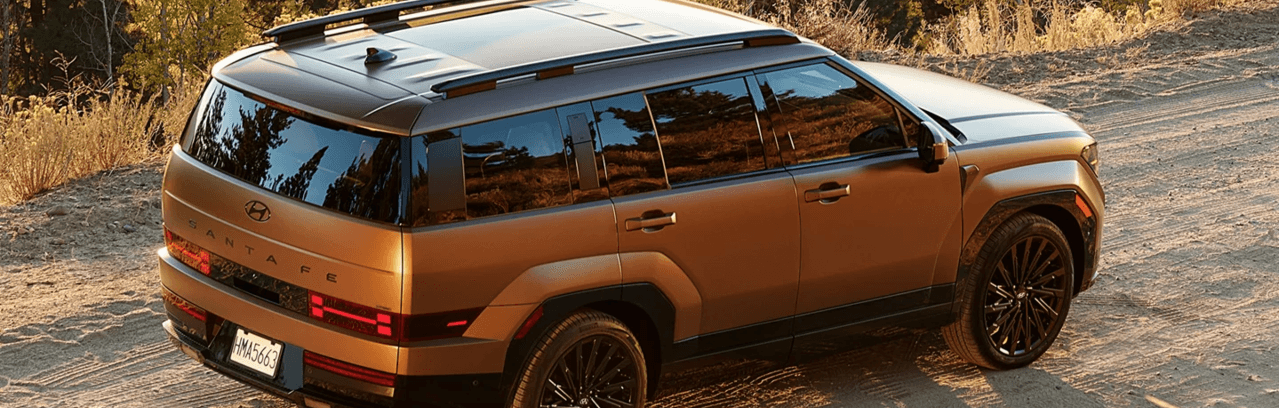
When investing in a family SUV in the Midwest, reliability isn't just a bullet point on a spec sheet—it’s the difference between a seamless morning commute on I-435 and being stranded during a January sleet storm. The 2026 Hyundai Santa Fe has arrived with a clear mission: to challenge the long-standing dominance of Japanese rivals by pairing over-engineered hardware with the most aggressive warranty coverage in the industry. For Kansas City drivers, this vehicle represents a calculated shift toward long-term durability that accounts for our specific climate and driving demands.
The primary hesitation many buyers have with modern, tech-heavy SUVs is the "what if" regarding long-term electronics and powertrain health. Hyundai addresses this directly through America’s Best Warranty, which effectively shields Kansas City families from significant repair costs during the most intensive years of the vehicle's life.
The centerpiece of this protection is the 10-year/100,000-mile Powertrain Warranty. This covers the engine, transmission, and the HTRAC AWD system—the most expensive components to replace. Complementing this is a 5-year/60,000-mile Basic Warranty that covers "bumper-to-bumper" concerns such as the infotainment system, suspension components, and interior craftsmanship.
Furthermore, the first three years or 36,000 miles include complimentary maintenance. This ensures that critical early-life services, such as oil changes and tire rotations, are performed by factory-trained technicians at local hubs like Victory Hyundai. For those opting for the Hybrid variants, the original owner enjoys a Lifetime Hybrid Battery Warranty, an industry-leading promise that mitigates any anxiety regarding battery degradation over time.
Under the hood, the 2026 Santa Fe uses the 2.5L Turbo GDI engine, producing 277 horsepower and 311 lb-ft of torque. While "turbocharged" used to be a red flag for longevity, Hyundai has implemented several engineering safeguards to ensure a 200,000-mile-plus lifespan:
Dual Injection System: By using both GDI (Gasoline Direct Injection) and MPI (Multi-Port Injection), the engine prevents carbon buildup on intake valves, which has historically plagued direct-injection engines.
Chain Timing: The engine uses a lifetime timing chain rather than a rubber belt, removing a common $1,200 maintenance item from the owner’s future.
Oil-Cooled Turbocharger: The turbo bearings are continuously cooled, preventing "coking" (oil baking) after high-speed runs on the Kansas Turnpike.
This engine block isn't an experiment; it is the same architecture used in the Genesis GV70, which has become a luxury benchmark for reliability. Even the 8-speed Dual-Clutch Transmission (DCT) has been refined with updated clutch materials to eliminate the low-speed "shudder" sometimes found in earlier iterations.
Kansas City winters are notoriously unpredictable, oscillating between dry pavement and six inches of heavy slush within hours. The HTRAC All-Wheel Drive system is engineered for this volatility. Unlike reactive systems that wait for a wheel to slip, HTRAC is proactive, constantly adjusting torque distribution.
The system can shift power from a 100:0 front-wheel bias for fuel efficiency to a 30:70 rear-wheel bias for aggressive climbing. With a multi-plate clutch capable of handling 1,200 Nm of torque and Active Yaw Control, the Santa Fe maintains stability even when taking a corner on an icy neighborhood street. With 8.4 inches of ground clearance, the Santa Fe sits high enough to clear the unplowed snow piles often found in the Arrowhead Stadium parking lots, a feat many smaller crossovers struggle to achieve.
Reliability is as much about the "bones" of the car as it is the engine. The 2026 Santa Fe is constructed with 72% High-Strength Steel and hot-stamped boron steel in the door frames. This creates a rigid "safety cell" that resists the chassis flexing that leads to rattles and squeaks over time.
The suspension is equally rugged. The multi-link rear suspension uses progressive bushings designed to last 150,000 miles, even when subjected to the potholes of downtown KC. For those who plan to tow a trailer to the Ozarks, the Limited trim includes self-leveling rear shocks that prevent the rear of the vehicle from sagging under heavy loads, preserving both suspension geometry and tire life.
To achieve the 200,000-mile milestone, following the factory maintenance schedule is essential. Because of the initial free maintenance period, the first 30,000 miles of ownership—including oil changes and brake fluid flushes—typically cost the owner nothing.
As the vehicle enters its middle life (60,000 to 100,000 miles), the primary costs are transmission fluid changes and spark plug replacements. These are "preventative" rather than "reactive" repairs. By the 100,000-mile mark, a comprehensive coolant flush and valve clearance inspection are recommended to keep the turbo system running at peak efficiency. Compared with luxury European SUVs, the long-term maintenance costs of the Santa Fe remain significantly lower due to the accessibility of parts and the simplicity of its engine layout.
Local data from the Santa Fe Owners KC Facebook Group—which tracks over 1,200 members—reveals a major repair rate of just 1.8%. This is remarkably low compared to the industry average of 7%. Owners in this group report a 97% satisfaction rate with winter performance and give local dealer service departments a 4.6/5-star rating.
When choosing a trim based strictly on long-term reliability, the SEL trim is often cited as the "sweet spot." It offers a balanced mix of modern electronics without the extreme complexity of the Calligraphy's luxury-grade sensors. The SE is the simplest mechanically, while the XRT is optimized for light off-roading with a more rugged AWD tuning.
Is Toyota still a better choice for long-term reliability? While Toyota has a historic reputation for longevity, Hyundai’s current 10-year warranty exceeds Toyota’s standard coverage by five years. When you factor in that Hyundai’s repair costs have leveled out to be competitive with Toyota, the Santa Fe offers a lower "risk-to-cost" ratio for the first decade of ownership.
Should I be worried about the durability of a turbocharged engine? Not with this generation. The 2.5L Turbo utilizes an oil-cooled bearing design and a dual-injection system specifically to solve the longevity issues of 1990s and 2000s turbos. This powertrain is now a staple across the Hyundai and Genesis lineups with a proven track record.
How does the electronics suite hold up in Kansas City’s extreme temperature swings? The Santa Fe utilizes Over-the-Air (OTA) updates, allowing Hyundai to fix software bugs and optimize battery or engine management proactively. Furthermore, Hyundai has retained physical controls for critical HVAC and volume functions, ensuring that basic usability remains reliable even if a screen or sensor requires a software patch.
Are the power-folding third-row seats durable enough for daily use? The motors for the third-row seating are cycle-tested for 15,000 operations. For most families, this represents over a decade of daily use without failure. The seats are designed to accommodate teens and adults comfortably for trips up to two hours, making them more than just "emergency" seats.
Written for https://vehiclesforsalenearkansascity.com/
By the USA TODAY Network Automotive Insights Team, in collaboration with Victory Hyundai and the Vehicles For Sale Near USA Today Kansas City Edition.