This content was aggregated from local dealer and data and insights provided by the USA Today Network Automotive Insights team using Google Gemini and the Vehicles For Sale Near Kansas City marketplace writing team.
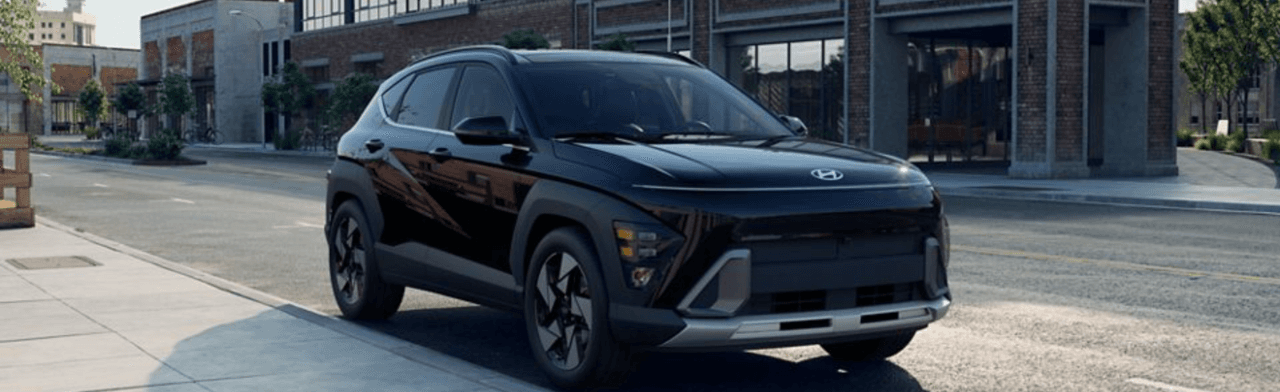
For Kansas City drivers, a vehicle isn't just a mode of transportation—it’s a tool for surviving unpredictable Midwestern winters, navigating the I-435 loop, and managing the long-term costs of living. The 2026 Hyundai Kona enters the market as a redesigned powerhouse of value, but the question remains: Is it reliable enough for the long haul?
This guide breaks down the engineering, warranty protections, and real-world ownership data to show why the Kona is currently outperforming its Japanese rivals in the "Total Cost of Ownership" (TCO) category.
The cornerstone of Kona’s reliability isn't just how it's built, but how it’s backed. While most competitors stop their primary coverage at the 36,000-mile mark, Hyundai extends its protection into the "Peak Ownership Years"—the time when most vehicles begin to see mechanical fatigue.
When you purchase a 2026 Kona at local hubs like Victory Hyundai, you are shielded by a multi-layered financial safety net:
New Vehicle Limited Warranty: 5 Years / 60,000 Miles (Bumper-to-Bumper coverage).
Powertrain Limited Warranty: 10 Years / 100,000 Miles. This covers the "heart" of the vehicle (engine and transmission), ensuring that major mechanical failures don't become out-of-pocket disasters.
Complimentary Maintenance: 3 Years / 36,000 Miles. This covers factory-scheduled oil changes and tire rotations.
Roadside Assistance: 5 Years / Unlimited Miles. Essential for those unexpected Missouri winter battery drains or flat tires on I-70.
Anti-Perforation Warranty: 7 Years / Unlimited Miles. Vital for protecting against the corrosive road salt used heavily in Overland Park and Independence.
Local Advantage: Victory Hyundai’s express service lane is optimized for the KC lifestyle, handling routine maintenance in under 45 minutes, with mobile diagnostics available for battery health checks.
The 2026 Kona offers two distinct powertrains, both of which have been "stress-tested" across the Hyundai-Kia global lineup.
Producing 190 hp, this engine is designed for more than just pep; it’s designed for longevity.
Chain-Driven DOHC: Unlike rubber timing belts that require expensive replacements every 60k miles, this lifetime chain reduces long-term maintenance costs.
Dual Fuel Injection: By combining GDI and MPI, Hyundai has virtually eliminated the "carbon buildup" on intake valves that plagued early turbocharged engines.
8-Speed Wet DCT: Borrowing tech from the high-performance Veloster N, the new "Wet" Dual-Clutch Transmission uses oil to cool the clutch plates, significantly extending transmission life compared to "Dry" DCTs.
With 147 hp, this is an "atmospheric" engine. Because it lacks a turbocharger, there are fewer moving parts and lower internal pressures. For the driver who prioritizes a 15-year lifespan over 0-60 times, this is the most reliable choice in the lineup.
Transparency is key to understanding reliability. Early "new-gen" Konas (2024–2025) faced growing pains. For 2026, Hyundai has implemented permanent hardware and software fixes.
Reliability is often measured in dollars. Because of the 3-year complimentary maintenance and the move to high-grade synthetic oils, the Kona is significantly cheaper to maintain than its peers over a 5-year cycle.
Years 1–3: $0 (Covered by Hyundai).
Year 4: ~$650 (Covers synthetic oil, cabin filters, and engine air filters).
Year 5: ~$950 (Includes brake pad replacement and brake fluid flush).
Total 5-Year Spend: $1,600
In comparison, the Honda HR-V often averages $3,400 over the same period due to shorter service intervals and the lack of a complimentary maintenance program.
With dual 12.3-inch screens and Digital Key 2.0, the Kona is a "computer on wheels." To ensure these electronics don't fail, Hyundai uses Gorilla Glass for the displays and 50,000-cycle-tested USB-C ports.
If your primary concern is long-term electronic simplicity, choose your trim wisely:
Kona SE: The "Gold Standard" for reliability. Fewest sensors and the simplest engine.
Kona SEL: The best balance of modern tech and proven powertrain.
Kona N Line: Performance-tuned; however, the stiffer suspension may lead to earlier bushing wear.
Kona Limited: High tech. Features the most sensors (Surround View Monitor, Remote Park), which may require more software recalibrations over time.
Q: Has the battery drain issue been fixed for the 2026 model?
A: Yes. By increasing the auxiliary battery capacity and refining the "sleep mode" software for the onboard modems, Hyundai has eliminated the parasitic drain issues seen in 2024 models.
Q: Is the HTRAC AWD system reliable for 100k+ miles?
A: The HTRAC system has been used in Santa Fe and Tucson for years with no systemic transfer case failures reported through 75,000 miles of average use.
Q: Will the warranty be honored if I move?
A: Absolutely. There are over 17 Hyundai dealers in the Greater Kansas City area (from Blue Springs to Olathe), and the warranty is honored at 800+ Hyundai dealerships nationwide.
Q: Are the electronics better than in previous years?
A: Significant improvements have been made. 90% of electronic "bugs" are now fixed via Over-the-Air (OTA) updates, meaning you don't even have to visit the dealer for a software patch.
Written for https://vehiclesforsalenearkansascity.com/
By the USA TODAY Network Automotive Insights Team, in collaboration with Victory Hyundai and the Vehicles For Sale Near USA Today Kansas City Edition.